

Why Wedding Coordinators Beat AI

Photography credits: Taylor Nicole Photography
If you've found yourself typing wedding questions into an AI chat at 11 p.m., you're not alone.
Couples are using it to sort through vendor options, build out timelines, and make sense of budgets that seem to grow every time they look at them. And it can definitely help.
So the question a lot of couples are quietly asking is a fair one: do I actually need a wedding coordinator anymore?
The honest answer is yes. AI can be useful for certain parts of your wedding planning process, but a wedding day still requires a human touch.
What AI Gets Right
It would be dishonest to dismiss what AI brings to the planning process, because it can contribute quite a bit.
The organizational side of wedding planning — building timelines, tracking vendor contacts, drafting communication templates, creating budget spreadsheets — is something AI handles well. It can generate a ceremony run-of-show in minutes. It can help you think through questions to ask a caterer, or flag things you might have forgotten to account for in your budget. For couples who feel overwhelmed at the start of the process, it offers a useful place to begin.
AI is also patient in a way that's valuable. You can ask it the same question seventeen different ways, change your mind, start over, and it doesn't get frustrated. For the early, exploratory stage of planning, that's worth something.
But planning a wedding isn't just an organizational task. And the moment it stops being one is exactly where AI reaches its limit.
What Coordination Actually Is
A wedding coordinator isn't primarily a scheduler or a checklist manager. Those things are part of the job, but they're not the whole job.
The real skill? Reading the room. Managing people. Making split-second calls and quietly absorbing every ounce of stress before it gets anywhere near the couple. It means knowing when a vendor is starting to slip, and nudging them back on track without ruffling anyone's feathers. Catching the look on the mother of the bride's face before it turns into a moment, and figuring out what's wrong before anyone else even notices. It means understanding that no timeline is likely to run precisely on schedule, and having the ability to adapt, the gut sense to know when to push, and when to just let things unfold.
None of that lives in a prompt. It lives in experience, emotional intelligence, and presence.
A coordinator who has worked a hundred weddings has seen almost everything. They know the specific way that the hour before a ceremony unfolds. They know that the family portraits almost always take longer than planned, and they've already built that into their thinking. They know how to have a difficult conversation with a vendor while keeping the couple completely insulated from it. That accumulated knowledge doesn't transfer into a language model. It transfers through years of standing in rooms like yours, on days like this one, and figuring out what the moment needed.
The Irreplaceable Thing
There's something else a coordinator provides that doesn't get talked about enough: they care.
Not in an abstract, professional sense. A good coordinator is genuinely invested in the couple having the best possible day. They're not processing a request. They're showing up for someone. That orientation — toward the people, toward the experience, toward the feeling of the day — shapes every decision they make in ways that are impossible to replicate algorithmically.
Something will go wrong on the wedding day. It always does. And when it happens, what saves you is having the right person in the room. Someone who actually cares how the day lands, who can put out a fire without anyone knowing there was one, and who keeps the bride calm and laughing in the bridal suite while it all gets handled quietly in the background. You can't automate that. You can't prompt your way to it either.
What's Already In Place at Spruce Mountain Ranch
For couples hosting their wedding at Spruce Mountain Ranch, there's a layer of on-site support already built into the experience — though it's worth being clear about what it is and what it isn't.
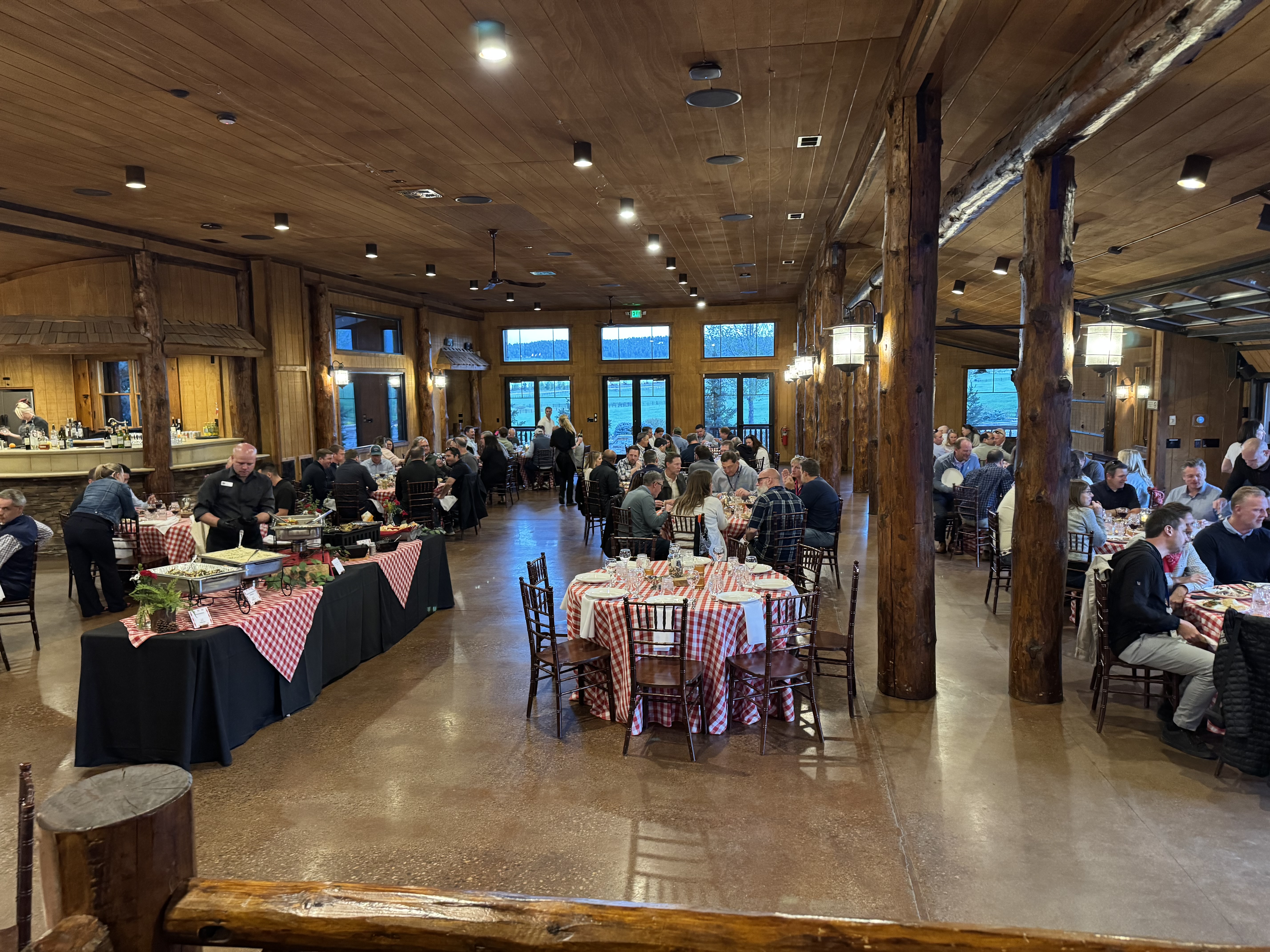
At Spruce Mountain Ranch, every event comes with a property manager on the ground the entire time — weddings, corporate gatherings, nonprofit events, private celebrations, any event. Not someone you can reach by phone if something happens to comes up. Not someone swinging by to do a quick walkthrough. They're there from the first vendor truck through the last song of the night, hands-on the whole way through.
The property manager's role covers a specific and essential set of responsibilities. They manage the vendors, making sure everyone is where they need to be and operating within the property's guidelines. They keep the property itself in immaculate condition throughout the event. They oversee the safety of guests, staff, and the property, including the Spruce Mountain cattle that share the ranch's expansive grounds. And they work alongside the client's event manager to support a seamless experience from start to finish.
That presence matters. It means the logistical and operational side of the venue is being actively managed by someone who knows the property inside and out, so that neither the couple nor their coordinator has to worry about it.
The Role a Wedding Coordinator Plays
Most couples don't realize how much a coordinator does before the wedding even starts. For weeks leading up to the big day, they're chasing down vendor confirmations, fine-tuning the timeline, running the rehearsal, and fielding the questions that would otherwise keep you up at night.
Come the day itself, they're solving problems you'll never hear about. Late vendors, wrong deliveries, well-intentioned relatives causing chaos — it gets handled. Quietly, efficiently, and without it ever becoming your problem.
The best coordinators rarely draw attention to themselves. Their work happens behind the scenes, creating an experience that feels effortless for everyone else.
When a coordinator and a property manager work together, their responsibilities complement one another. The property manager focuses on the venue itself — overseeing the grounds, facility operations, approved vendors, and safety considerations. The coordinator focuses on the people and the flow of the event — managing the timeline, guiding the wedding party, and making sure the couple can stay present and enjoy the day.
When unexpected issues arise, they're addressed quickly and quietly, allowing the couple and their guests to remain focused on what they're there to celebrate.
The Bottom Line
Use every tool available to you. Let AI help you get organized, ask better questions, and think through details you might have missed. There's no reason not to.
But when the day arrives — when the music starts, and the aisle is full, and the room is exactly what you spent months imagining — you want a person in your corner. Someone who has done this before, who knows what this day means, and who is going to make sure it goes the way it should.
AI can build the plan. A great coordinator makes sure the plan survives contact with the actual day. That's still worth investing in.
Looking for a Wedding Venue?
Finding the right venue is about more than choosing a beautiful backdrop. The best venues combine stunning scenery with experienced on-site support, thoughtful logistics, and a team that understands how weddings actually unfold.
If you're searching for a venue that offers both breathtaking views and experienced support, Spruce Mountain Ranch is ready to help you create a wedding day that's every bit as memorable as you've imagined.
Read more:


2024 © All Rights Reserved. Spruce Mountain Ranch Privacy Policy