

What Couples Don't See on Their Wedding Day (But Always Feel)

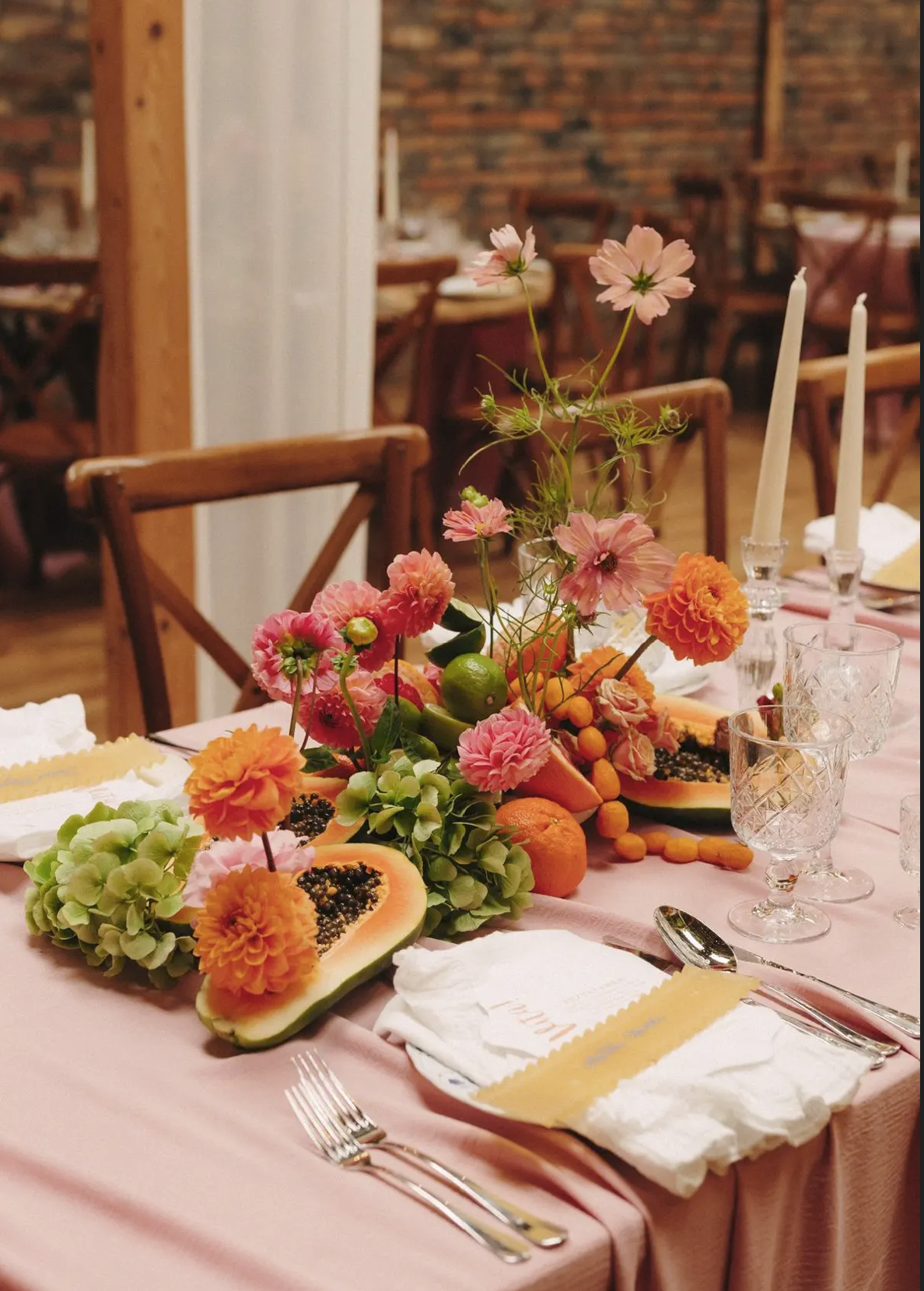
Photography credit: Tyler Freear Photography
There's a moment that happens at nearly every wedding. The couple is standing at the altar, or sharing their first dance, or laughing with their closest friends over dinner, and everything just feels right. The timing is perfect. The room looks exactly the way they imagined. Nobody seems stressed. The whole day has a quality to it that's hard to articulate but impossible to miss.
What most couples don't realize in that moment is that the feeling didn't happen by accident.
Behind every seamless wedding is a layer of work that guests never see and couples are rarely fully aware of until well after the day is over. It's the invisible infrastructure of a well-run event, and it's what separates a wedding that flows beautifully from one that quietly unravels at the seams.
The Hours Before You Arrive
By the time a couple arrives at their venue on their wedding day, hours of preparation have already taken place.
Vendors have been checked in and pointed to where they need to go. Tables are set. Lighting's been tested twice. The catering team knows the service window. The ceremony space has been rearranged at least once, maybe more. Before a single guest arrives, a quiet stream of small decisions has already been made and moved past.
This is where most of the unseen work lives, and it takes someone who knows the property and can hold a dozen moving pieces in their head at once. When a delivery shows up later than expected, the setup order shifts, but the couple never hears a word about it. When a vendor isn't sure where to stage their equipment, they get an answer on the spot instead of standing around waiting for one.
For couples, the day begins with excitement and anticipation. That's exactly how it should be. The logistical reality happening in the background is someone else's job to manage.
Vendor Coordination Is Its Own Full-Time Role
Most couples work with somewhere between five and ten vendors on their wedding day. Photographer. Videographer. Caterer. Florist. DJ or band. Hair and makeup. Officiant. Transportation. Sometimes more.
Each of those vendors has their own timeline, their own setup needs, and their own questions. On the day of the wedding, all of those timelines have to merge into a single, coherent event schedule. That doesn't happen automatically.
A venue coordinator is often the central point of contact for every vendor on-site. They're the person a DJ calls when they can't find the right electrical outlet. They're keeping tabs on whether the catering team is on track for the dinner service window, and quietly nudging things forward when they aren't.
Good vendor coordination is almost entirely invisible. You only notice it when it's missing, and by then, the effects are already rippling through the timeline.
Even the most carefully planned wedding timeline shifts on the actual day.
Hair and makeup run long. Family portraits take more time than expected because someone is always missing from the shot. The ceremony starts a few minutes late because guests are still finding their seats. These are not failures of planning. They're just the reality of coordinating a large group of people through an emotionally significant day.
What matters is that someone is watching the timeline in real time, making small adjustments before small delays become large ones. If the ceremony runs ten minutes behind, the cocktail hour may need to absorb that gap. If the cocktail hour extends, the catering team needs a heads-up so dinner service doesn't launch on the original schedule into a room that isn't ready.
These micro-adjustments happen constantly throughout the day. Most of them are invisible to the couple and their guests. The day just feels like it's flowing naturally, which is exactly the goal.
Solving Problems Nobody Announced
Here's the part that doesn't make it into the wedding highlights reel: something will go sideways. It happens at almost every wedding, regardless of how thoroughly everything has been planned.
A boutonniere gets left in the wrong refrigerator. A groomsman locks his keys in his car at the venue. A candle centerpiece needs to be swapped out because of a venue restriction that wasn't communicated clearly to the florist. A guest has a dietary need that wasn't captured in the RSVP process.
None of these things are catastrophes. But each one requires someone to notice, problem solve, and resolve it quickly and quietly, before it has a chance to affect the couple's experience or the flow of the event.
The best venue teams develop a kind of radar for these moments. They're anticipating potential friction points before they become actual problems, and when something does come up unexpectedly, they handle it without making it anyone else's concern.
When couples remark afterward that their wedding day felt surprisingly stress-free. In many cases, that's not luck. It's the result of a professional team working hard to make sure nothing lands on the couple's plate that doesn't need to.
The Property Itself Needs Managing
There's another layer of behind-the-scenes work that's easy to overlook: maintaining the venue itself throughout the event.
A venue doesn't maintain itself through a six-hour event. Guests move, spaces shift, the night builds, and the property has to keep up with all of it. Restrooms get checked. Outdoor areas get walked. The little things that quietly affect how a space feels get handled before anyone notices they need to be. By the end of the night, the place should look like it's being taken care of, because it has been.
At Spruce Mountain Ranch, a property manager is on-site at every single event. Not just available by phone. Not stopping in to check on things. Present, actively managing the property, the vendors, the safety of guests, and the overall condition of the space from setup through the final moments of the evening.
That commitment matters more than it might initially seem. When a couple chooses Spruce Mountain Ranch, they're not just booking a beautiful location. They're getting a professional team that treats every wedding with the same level of care and attention, regardless of size or format.
What Couples Feel Without Knowing Why
The invisible work of a well-coordinated wedding creates something couples often struggle to describe when they look back on the day. Everything just worked. The day felt easy. There was nothing to worry about.
That feeling is the result of dozens of people doing their jobs extremely well, most of it completely out of sight.
It's the coordinator who caught the timeline slipping and quietly corrected it. It's the property manager who resolved a vendor issue before it reached the couple. It's the team that had the room looking exactly right before the doors opened, and kept it that way all evening.
While Spruce Mountain Ranch provides experienced property managers to support the venue and overall guest experience, we do not serve as wedding planners or day-of coordinators. However, we’re always happy to refer couples to trusted planners and coordinators if they would like recommendations for experienced professionals.
The most memorable weddings aren't the ones where everything was perfect from the start. They're the ones where, no matter what came up, someone was already handling it.
That's what great venue support looks like. And at Spruce Mountain Ranch, it's what couples feel on their wedding day, even when they can't quite explain why everything felt so right.
If you're beginning your venue search and want to experience what genuine professional support looks like in a stunning Colorado setting, contact our team to schedule a tour. We'd love to walk you through what your wedding day could feel like here.
READ MORE
Seasonal Floral Arrangements for Your Spring Wedding
Wedding Etiquette in 2026: Everything You Need to Know
Your Guide to Planning the Perfect Garden Party Wedding
What to Look for When Choosing a Photographer for Your Spruce Mountain Ranch Wedding



2024 © All Rights Reserved. Spruce Mountain Ranch Privacy Policy